It’s quite instructive to look at the “highlights” of the nearly $1 trillion stimulus passed by the Democrat Congress at the urging of President Obama. Three years after Obama promised, “It’s a plan that will save or create up to 4 million jobs over the next two years” and Senate Majority Leader Harry Reid (D-NV) boasted, “This bill creates 3.5 million jobs,”there are 5 million fewer workers employed in the United States than White House economists Christina Romer and Jared Bernstein predicted. Almost half a million jobs have been lost since the day Obama signed the bill.Three years ago, Romer and Bernstein also issued their now-famous chart and predicted that unemployment would not exceed 8% with Democrats’ stimulus plan. But unemployment has stood above 8% for 36 months and “CBO projects that the unemployment rate will remain above 8 percent until 2014.”
Newspaper editorials have been slamming the stimulus bill for three years.The New York Post said during the summer of 2010 that “[i]t was an $800 billion misadventure that will be wreaking havoc on the economy for years to come.” Months after the bill was signed, The Denver Post declared, “[W]e’ve learned not to trust the government’s accounting on the massive stimulus bill just yet. The jobs figures are wildly misleading . . . .” Last fall, The Richmond Times-Dispatch snarked, “The stimulus did less good than earlier estimates suggested. There’s a big shock.” When President Obama and Democrats were demanding another stimulus bill last year, The Wall Street Journal asked, “Why did his first jobs plan—the $825 billion stimulus—so quickly result in the need for another jobs plan?” And the Orange County Register wondered, “Considering the indisputable flop of 2009’s massive infusion of tax money, why would spending less this time fare better?” The Daytona Beach News-Journal concluded, “[T]he $800 billion Stimulus I bill passed by Congress in 2009 did not live up to its billing. Despite this massive infusion of deficit spending, the economy has continued to sputter.” And considering the Solyndra debacle, the money for which came from the stimulus bill, Obama’s hometown Chicago Tribune wrote in September, “If the federal government can’t responsibly manage the money it’s doling out in the name of economic stimulus, then it has no business doling out the money — period . . . .”
Amazingly reports are still coming out about the various failures of the stimulus. Only YESTERDAY, NBC in San Francisco reported, “Three years ago politicians in Washington and here in the Bay Area touted the urgent need for the federal stimulus package. . . . The NBC Bay Area Investigative Unit spent weeks analyzing government stimulus data, in partnership with the nonprofit investigative news group ProPublica. . . . But our computer analysis shows money approved doesn’t always mean money spent—or jobs created. According to the latest government data, 19 Bay Area stimulus projects funded in 2010 or earlier have not broken ground. That totals more than $70 million. They haven’t created jobs, either. We found two projects approved more than two years ago that have not even started. . . . ‘Give the money to help people find jobs,’ said unemployed San Jose resident Harry Ahn, ‘and I would be expecting more people to actually be finding jobs.’”
“If there’s a debt, Missouri’s kids and grandkids will pay that debt off”–Governor Jay Nixon(2009)
Today marks the 3-year anniversary of President Obama signing his nearly $1 trillion stimulus bill into law. A report from Obama economic advisors Christina Romer and Jared Bernstein in early 2009 claimed that if the stimulus passed, unemployment would not exceed 8 percent. And their now-famous chart showed that by now, unemployment was supposed to be down to 6% with the stimulus bill’s passage and 7% without it. Barely a week after the bill was signed, Vice President Joe Biden boasted, “this is about getting this out and spent in 18 months to create 3.5 million jobs and to tee this up so the rest of the good work that’s being done here literally drop-kicks us out of this recession . . . .”
Yet three years later, the unemployment rate has been higher than 8% for 36 months. The average duration of unemployment was 40.1 weeks as of January. Over half a million jobs have been lost since the stimulus was signed, and millions have been lost since the recession began. Clearly the stimulus did not live up to the Obama administration’s promises.
And while the stimulus, which added nearly $1 trillion to the debt, was failing to “drop-kick” the country out of recession, the Obama administration was using money made available in the legislation to finance disasters like Solyndra. Just this week, in an article titled, “Federal funds flow to clean-energy firms with Obama administration ties,” The Washington Post reported, “With the 2008 economic crisis, new private investment in fledgling clean-tech companies withered. But passage of the $787 billion stimulus package offered new opportunities to launch and grow those firms, with $80 billion set aside for clean energy and energy-efficiency efforts. Suddenly flush with cash, the Energy Department was under orders to ramp up quickly and get money out to promising companies. The administration tapped industry players to take on key Energy Department roles, both as agency staffers and outside advisers on agency boards.” The result? “Overall, the Post found that $3.9 billion in federal grants and financing flowed to 21 companies backed by firms with connections to five Obama administration staffers and advisers.”
Editorial pages across the country today are slamming the budget President Obama released on Monday. USA Today writes, “The best test of a budget proposal these days is whether it reins in the national debt, which is projected to equal a troubling 74% of gross domestic product this year. The last time the publicly held debt was that high as a percentage of the economy was in 1950, when the nation was still paying off the stupendous amount of money it had to borrow to fight and win World War II. The election-year budget President Obama sent to Congress on Monday fails that test.”
Bloomberg News says, “Do as I say, not as I do. That was the unwelcome message in President Barack Obama’s federal budget for 2013. . . . This is a wasted opportunity, even considering that the final budget of the president’s term is largely a political document.”
The Wall Street Journal editors point out, “Federal budgets are by definition political documents, but even by that standard yesterday’s White House proposal for fiscal year 2013 is a brilliant bit of misdirection. With the abracadabra of a tax increase on the wealthy and defense spending cuts that will never materialize, the White House asserts that in President Obama’s second term revenues will soar, outlays will fall, and $1.3 trillion annual deficits will be cut in half like the lady in the box on stage. All voters need to do is suspend disbelief for another nine months. And ignore the first four years.”
The AP goes through some of the misdirection in President Obama’s budget in a fact check piece today: “When a president introduces a budget, there are always phantoms flitting around the room. President Barack Obama’s spending plan sets loose a number of them. It counts on phantom savings from the wars in Iraq and Afghanistan. It’s underpinned by tax increases Republicans won’t let happen and program cuts fellow Democrats in Congress are all but certain to block. And it assumes rates of growth that the economy will have to become strikingly undead to achieve.”
The Detroit News wrote, “President Barack Obama’s 2013 budget proposal should be dismissed as a blueprint for his re-election campaign. But it’s worse than that. If passed as presented — and there’s little likelihood of that — the spending plan would lock America on an auto-pilot course for Greece.” And the Los Angeles Times noted, “The day after the Greek Parliament approved another round of deep spending cuts in the face of violent protests, President Obama released a budget proposal for the coming fiscal year that offers no real solution to the United States’ long-term fiscal problems.”
Yet it was President Obama’s hometown Chicago Tribune that was particularly harsh. In an editorial titled, “Athens on the Potomac,” the Tribune wrote, “Conveniently, one of this nation’s plausible futures plays out vividly on a TV screen near you: Fire-heaving mobs enraged by the harsh consequences of rampant public borrowing have torched one of Europe’s grossly indebted capitals, Athens. Fretful officials in other capitals — Rome, Lisbon, Madrid and more — must wonder whether the flames will rage in their countries next. . . . With nothing more noble than election strategy busying the Capitol and White House, basic management of the nation’s business has to wait for some point beyond Election Day. . . . Monday’s document, in truth, is a campaign playbook — the vision of government that Obama hopes voters will reward with a second presidential term.”
The Tribune points out, “[T]he proposal [President Obama] floated Monday actually would aggravate the somewhat rosier debt projections he provided to Congress as recently as September. What we have then is a debt debacle that, even with the president’s plan, would continue to grow our debt by leaps and bounds.”
It’s telling that Senate Democrats haven’t rushed to the microphones to laud Obama’s latest budget. According to Roll Call, “While President Barack Obama was rallying the faithful around a politically minded budget laden with base-nourishing tax and spending proposals, Senate Majority Leader Harry Reid was keeping a low profile. . . . [W]hen he went to the floor Monday afternoon — long after the budget had been delivered and an 11:15 a.m. embargo had been lifted — Reid focused on the mundane goings-on of the Senate chamber in his opening remarks. In fact, when Reid did touch on a president’s plan for spending, it wasn’t to reference Obama’s newly proposed budget — or, in fact, any of Obama’s budget plans.” Roll Call further notes, “Reid’s hesitancy to talk about the budget is understandable; the Senate hasn’t produced a budget in almost three years . . . . Sen. Tom Udall (D-N.M.) was also noncommittal. . . . Even worse were statements from Members such as Sens. Joe Lieberman (I-Conn.) and Mark Pryor (D-Ark.), who rejected it outright. Pryor . . . said, ‘This budget proposal is simply a case of misplaced priorities when it comes to Arkansas.’” And The Hill observed today, “For the second day in a row Senate Majority Leader Harry Reid (D-Nev.) ignored President Obama’s $3.8 trillion budget proposal, leaving his deputy, Sen. Dick Durbin (D-Ill.), to rebut yet another withering attack from across the aisle.”
Related:
Video: Crossroads GPS McCaskill Radio Ad: ‘Lemmings and Liberals’
Fox News Commentator Todd Starnes was in St. Louis yesterday discussing his new “Book Dispatches From Bitter America and media stereotypes of Middle America.”
Former Senator Jim talent is taking a little grief from the media on his attack on Rick Santorum’s voting record:
The Weekly Standard:
Talent continued, pointing to a few votes that show Santorum’s “liberal” spending record. “I want to note that Senator Santorum voted for No Child Left Behind, which was a big expansion of federal power over local education,” he said. “He voted for Medicare Part D, a big expansion of a federal entitlement.”
Asked about the validity of these criticisms, particularly since Talent himself had a similar voting record to Santorum while both men served in the Senate, Talent said he would be “happy” to compare his record to Santorum’s if they were running against each other.
Talent followed up with THE WEEKLY STANDARD, calling back to explain his comments further. Talent clarified that he didn’t mean to say that Santorum’s (and his own) votes for bills like Medicare Part D can’t “be explained or justified, because they can” but that Santorum’s self-described image as a true conservative doesn’t reflect the truth. Read more…
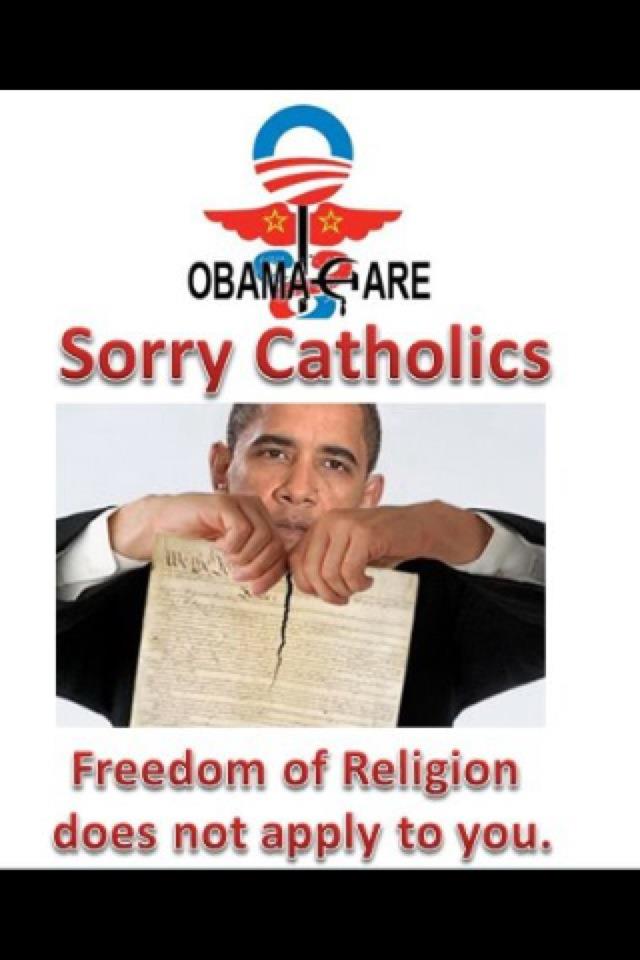
As the Obama Administration moves forward with it’s controversial directive mandating religious institutions provide contraceptives to their employees, we thought we’d take you back to these words uttered by Rep. Carnahan back in 2009. Besides saying that Obamacare opponents were “attack[ing] our representative form of government,” he also said it was nothing more than a “conspiracy” to say that the government wanted to take over your healthcare. We knew better, didn’t we?
Politico writes today, “Senate Republicans late Tuesday stepped up their assault on the White House’s politically volatile contraceptive coverage mandate, vowing to find some way of striking it if the administration didn’t roll back the rules itself. Using unusually strong language in a floor speech, Senate Minority Leader Mitch McConnell called the new policy ‘abhorrent’ and said the administration had crossed a ‘dangerous line’ with its decision to require employers to offer birth control for free as a preventive health benefit in health plans, a decision that was part of the implementation of the 2010 health care reform law. . . . ‘Make no mistake: The Obama administration’s decision to force religious hospitals, charities and schools to comply with a mandate that violates their religious views is abhorrent to the foundational principles of our nation,’ McConnell said. ‘No one in the United States of America should ever be compelled by their government to choose between violating their religious beliefs or be penalized for refusing.’”
Another Politico piece notes, “Led by Minority Leader Mitch McConnell (R-Ky.), senators have blasted the contraception ruling in floor speeches, at news conferences and in letters to top administration officials.” And CBS News adds, “Republicans are keeping up the pressure on the Obama administration to walk back its new rule on birth control coverage, with Senate Republican leader Mitch McConnell warning today, ‘If they don’t, Congress will act.’”
In an editorial today, The Wall Street Journal looks beyond the mandate itself, pointing to the underlying problems of Obamacare. “The political furor over President Obama’s birth-control mandate continues to grow, even among those for whom contraception poses no moral qualms, and one needn’t be a theologian to understand why. The country is being exposed to the raw political control that is the core of the Obama health-care plan, and Americans are seeing clearly for the first time how this will violate pluralism and liberty.”
The WSJ editors write, “The Affordable Care Act itself is ambiguous about what counts as a religious organization that deserves conscience protection. Like so much else in the rushed bill, this was left to administrative discretion. What the law does cement is the principle that the government will decide for everyone what ‘health care’ must mean. The entire thrust of ObamaCare is to standardize benefits and how they must be paid for and provided, regardless of individual choices or ethical convictions. To take a small example: The HHS rule prohibits out-of-pocket costs for birth control, simply because Secretary Kathleen Sebelius’s regulators believe no woman should have to pay anything for it. To take a larger example: The Obama Administration’s legal defense of the mandate to buy insurance or else pay a penalty is that the mere fact of being alive gives the government the right to regulate all Americans at every point in their lives. Practicing this kind of compulsion is routine and noncontroversial within Ms. Sebelius’s ministry. That may explain why her staff didn’t notice that the birth-control rule abridges the First Amendment’s protections for religious freedom. Then again, maybe HHS thought the public had become inured to such edicts, which have arrived every few weeks since the Affordable Care Act passed. Bad call.”
This is embarrassing watching Congressman Cleaver labor through his talking points while trying to explain that deficit spending has helped the economy. As the current Congressional Black Caucus chairman, we’d expect him to be out front explaining away the president’s failures, but he has absolutely no credibility when it comes to deficit reduction!
The Los Angeles Times writes today, “Last month turned out to be the most expensive January ever at U.S. gasoline pumps . . . . January is typically a month of falling gasoline prices because fuel demand falters in the slower travel weeks that follow the year-end holidays. Not so this year. In January, retail gasoline prices averaged $3.37 a gallon, according to the Oil Price Information Service, a private fuel information service. That compared with the previous record average for the month of $3.095 a gallon, set last year. In 2010, January gasoline prices averaged just $2.71 a gallon. The new record meant more pain in Americans’ budgets. A typical household, burning about 50 gallons of gasoline a month, paid about $168.50 for that fuel in January, or $33 more than in January 2010. . . . In February, pump prices have continued to rise and remain at record levels for this time of the year. . . . The price spurt may not be over, said Patrick DeHaan, senior petroleum analyst for GasBuddy.com, a fuel price tracking website. ‘Gasoline prices tend to start moving significantly higher toward the end of February and into mid-March, so motorists should be preparing for higher prices,’ DeHaan said.”
This follows yesterday’s news from USA Todaythat $4 gas may be on the way and “Prices could spike another 60 cents or more by May.”
These gas price spikes again show the necessity of securing reliable sources of American energy, such as a pipeline that would bring oil from our friends and allies in Canada (as well as oil formations in the United States). Keystone XL would do just that, in addition to creating tens of thousands of jobs for Americans.
Unfortunately, President Obama rejected the pipeline last month. And now, according to Canada’s Postmedia News, “[Canadian Prime Minister Stephen Harper] is courting China as a customer for Canadian natural resources — insisting it’s in Canada’s national interest to send oil and gas to Asia — and looking to sew stronger economic ties with the world’s fastest-growing economy. . . . It’s expected China will seek a more formalized energy relationship with Canada during the official visit, with its state-owned petroleum companies having invested more than $10 billion into Alberta’s oilsands and B.C. shale gas deposits over the past few years. . . . Currently, Canada only exports oilsands crude to the United States, but the Obama administration’s recent decision to reject, for now, the Keystone XL oilsands pipeline has Harper searching for new energy customers.”
Clearly, we can’t afford to delay approval of the Keystone XL pipeline any longer. Therefore, Sen. Orrin Hatch (R-UT), ranking member on the Senate Finance Committee, plans to introduce an amendment to a highway bill that would finally approve the Keystone XL pipeline and expand domestic energy production. As CQ puts it, the Hatch amendment “would allow energy leasing in the Arctic National Wildlife Refuge and waters off California and in the Eastern Gulf” and “would immediately approve the Keystone XL pipeline.”
As North Dakota Sen. John Hoeven said in the Weekly Republican address last month, “If the Keystone XL pipeline isn’t built, Canadian oil will still be produced and transported—700,000 barrels a day of it—but instead of coming to our refineries in the United States, instead of creating jobs for our people, instead of reducing our dependence on Middle Eastern oil and keeping down the cost of fuel for American consumers—that oil will be sent to China.”
It’s long past time for President Obama to approve this pipeline, the jobs it will create, and the energy security it will bring.